
Cloudflare / internal apps
Cloudflare Access for Private Internal Apps: My Lightweight Pattern
Some internal tools need a front door, not a second product devoted to sign-in.
By Ryan Vogel 5 minute read
The pattern I keep reaching for
For personal and internal projects, I have come to like a simple separation: deploy the application, then put it behind Cloudflare Access SSO. I used that pattern for our internal meme app, and it worked well for the way we used that tool.
Identity still matters. I just do not want every small application to present its own sign-in product before anyone can use the feature I actually built. I keep the access boundary and the app as separate concerns.
A deliberately narrow audience makes that separation attractive. A public product usually has account flows, onboarding, recovery, permissions, and customer-facing expectations of its own. An internal gallery may simply need to stay off the public internet and sit behind the organization’s established sign-in path. I do not want to design them as if they were the same product.
I used one configuration for this team app, and I would not copy it blindly to another tool. I have not included its Access policy, identity provider, deployment topology, service-token setup, or in-app authorization decisions here. Without those details, this is a product pattern rather than a setup guide.
Why the meme app fit
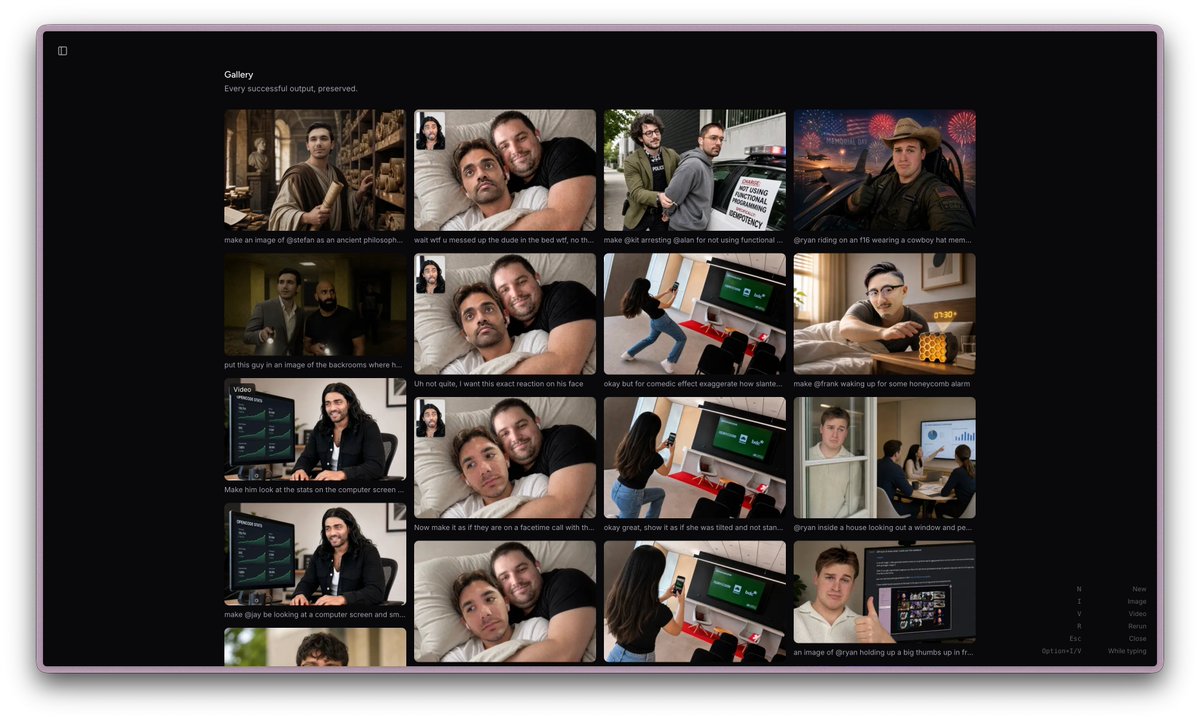
The screenshot attached to my post shows the internal app after entry: a dark gallery filled with generated team images and short prompt-like captions. It is clearly a focused tool rather than a general public platform. The gallery preserves outputs so the team can see what has already been created.
That image is useful context for why I liked the pattern. The application’s visible job is to display the gallery. Nothing in the screenshot suggests that the team needed to spend the app’s primary interface on authentication. Access SSO sat in front of it, while the app itself stayed centered on the internal content.
I only captured the gallery view, not the sign-in flow. I did not include its group rules, session behavior, audit coverage, or fallback behavior. Those choices are specific to the app. The part I kept reaching for was the separation itself: Access at the entrance, meme gallery behind it.
Why this is a product decision
Authentication work is often discussed as a purely technical requirement, but where that work lives changes the product. Building it directly into every small application adds screens and states that have little to do with the application’s reason to exist. Placing an access layer in front can keep the internal interface focused, provided that the chosen boundary actually matches the project’s requirements.
“Internal” is not a synonym for low-risk, and SSO does not answer every security question. For this meme gallery, I only described the front-door decision. I did not lay out its authorization model, data controls, logging, or other handling, and I would not treat Access as a replacement for requirements inside the app.
For a small tool with a known audience, I can treat access as infrastructure surrounding the app instead of a feature duplicated inside it. I use that approach when the external gate and the application’s real security requirements line up.
Where I would draw the boundary
I would not generalize this one success into “put anything behind SSO and it is secure.” Before using the pattern, the real questions are what the app exposes, who should reach it, and whether a front-door check is sufficient for every action behind that door. The answers depend on the tool.
For the internal meme app, I deployed a focused team application, protected its entry with Cloudflare Access SSO, and liked the result. That is why the pattern earned a place in my internal-tool toolbox. The exact configuration belongs to that app; the separation is the part I keep reusing.
The original post